AI Chat Paper
Note: Please note that the following content is generated by AMiner AI. SciOpen does not take any responsibility related to this content.
{{lang === 'zh_CN' ? '文章概述' : 'Summary'}}
{{lang === 'en_US' ? '中' : 'Eng'}}
Chat more with AI
PDF (15.3 MB)
Collect
Submit Manuscript AI Chat Paper
Show Outline
Outline
Show full outline
Hide outline
Outline
Show full outline
Hide outline
Research Article | Open Access

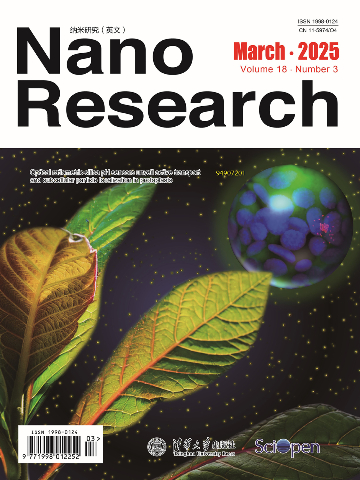
Amplifying cation effects on high-curvature nanostructures via enhancing interfacial electric field for CO2RR to multicarbon product

Weizheng Tang1Yongjun Shen1Yu Yang3,4Congcong Li1Yu Li1Shixin Yin1Fengwang Li3,4 ( )Huihui Li1 ( )Chunzhong Li1,2 ( )
Key Laboratory for Ultrafine Materials of Ministry of Education, School of Chemical Engineering, East China University of Science and Technology, Shanghai 200237, China
Shanghai Engineering Research Center of Hierarchical Nanomaterials, School of Materials Science and Engineering, East China University of Science and Technology, Shanghai 200237, China
School of Chemical and Biomolecular Engineering, The University of Sydney, NSW 2006, Australia
ARC Centre of Excellence for Green Electrochemical Transformation of Carbon Dioxide, The University of Sydney, NSW 2006, Australia
Show Author Information

Abstract

Cation effect has emerged as a promising strategy for modulating the product distribution during the electrocatalytic CO2 reduction reaction (CO2RR). However, the strategy of solely increasing bulk cation concentration in the electrolyte to intensify cation effect at the electrode interface exacerbates carbonate formation issue. Therefore, it is crucial to achieve local cation enrichment at the electrolyte interface without increasing bulk cation concentration. Herein, we propose a "surface charge density modulation" strategy to strengthen interfacial electric field, intensifying the local cation effect at the electrode interface in a low-concentration electrolyte. We implement this strategy using leaf-like CuO nanosheets, introducing a high-curvature morphology into the catalysts. As a result, the CuO nanosheets display 3.4-fold enhancement in Faradic efficiency (FE) of multi-carbon products (C2+) compared to CuO nanospheres with low-curvature. In-situ Raman spectroscopy and control experiment varying concentration of K+ reveal the mechanism on how the cation effect and interfacial electric field influence CO2RR performance.

Graphical Abstract

The high-curvature structure of catalysts facilitates the migration of free electrons, leading to a localized increase in surface charge density at the tip regions and thus an enhanced local electric field. This phenomenon promotes the stabilization of dipolar intermediates and intensifies the cation effect for the highly selective formation of C2+ products during CO2 reduction reaction (CO2RR).

Electronic Supplementary Material

Download File(s)
7200_ESM.pdf (4.8 MB)

References

【1】
【1】
 
 
Nano Research
Article number: 94907200

{{item.num}}

Comments on this article

Go to comment

< Back to all reports

Review Status: {{reviewData.commendedNum}} Commended , {{reviewData.revisionRequiredNum}} Revision Required , {{reviewData.notCommendedNum}} Not Commended Under Peer Review

Review Comment

Close
Close
Cite this article:
Tang W, Shen Y, Yang Y, et al. Amplifying cation effects on high-curvature nanostructures via enhancing interfacial electric field for CO2RR to multicarbon product. Nano Research, 2025, 18(3): 94907200. https://doi.org/10.26599/NR.2025.94907200
Topics:

2630

Views

484

Downloads

1

Crossref

1

Web of Science

1

Scopus

0

CSCD

Received: 07 November 2024
Revised: 13 December 2024
Accepted: 14 December 2024
Published: 21 January 2025
© The Author(s) 2025. Published by Tsinghua University Press.

This is an open access article under the terms of the Creative Commons Attribution 4.0 International License (CC BY 4.0, https://creativecommons.org/licenses/by/4.0/).